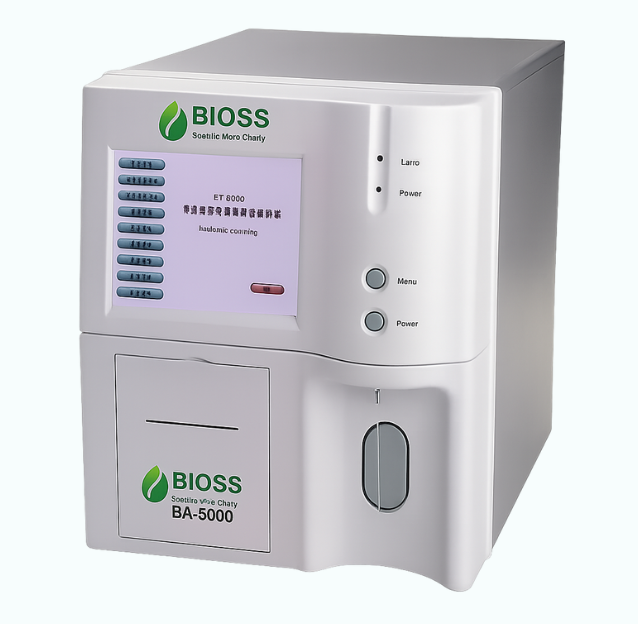
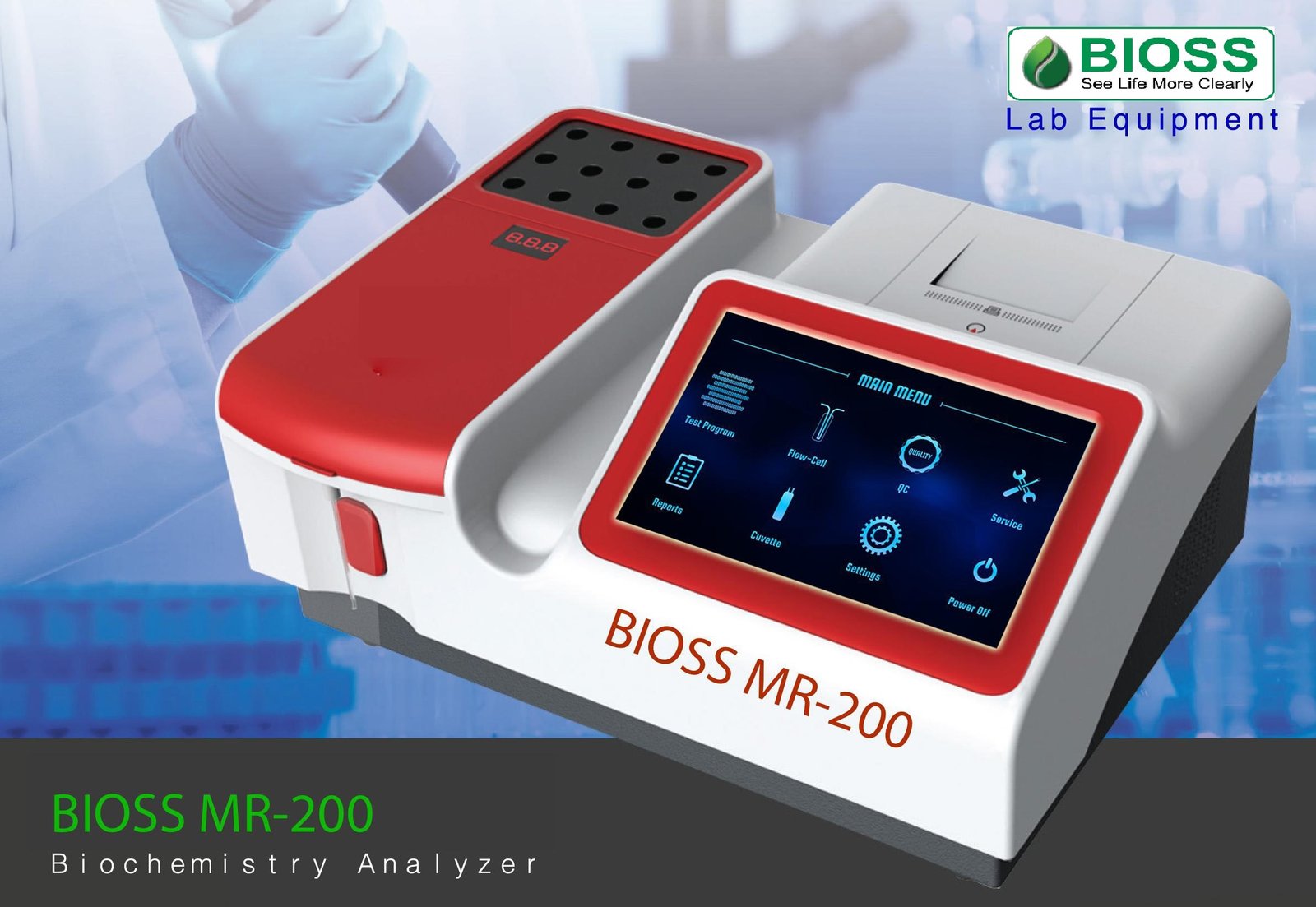
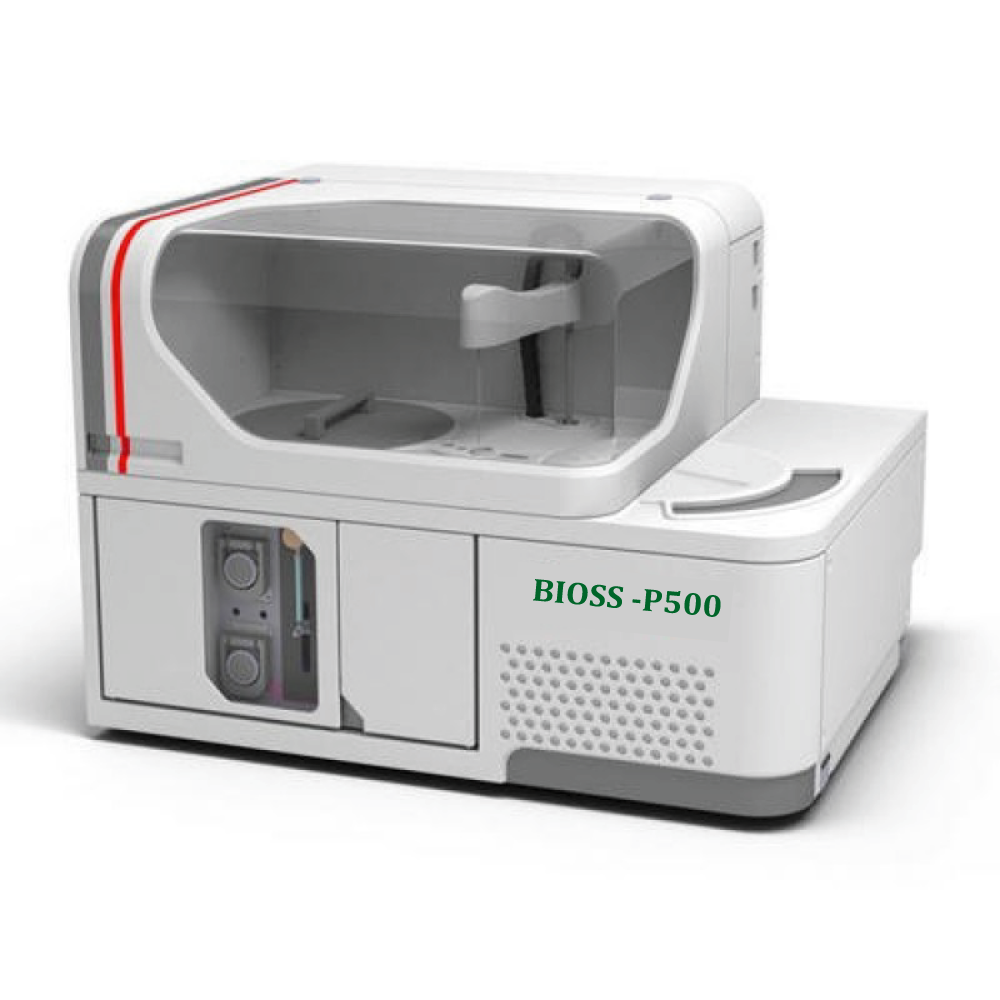
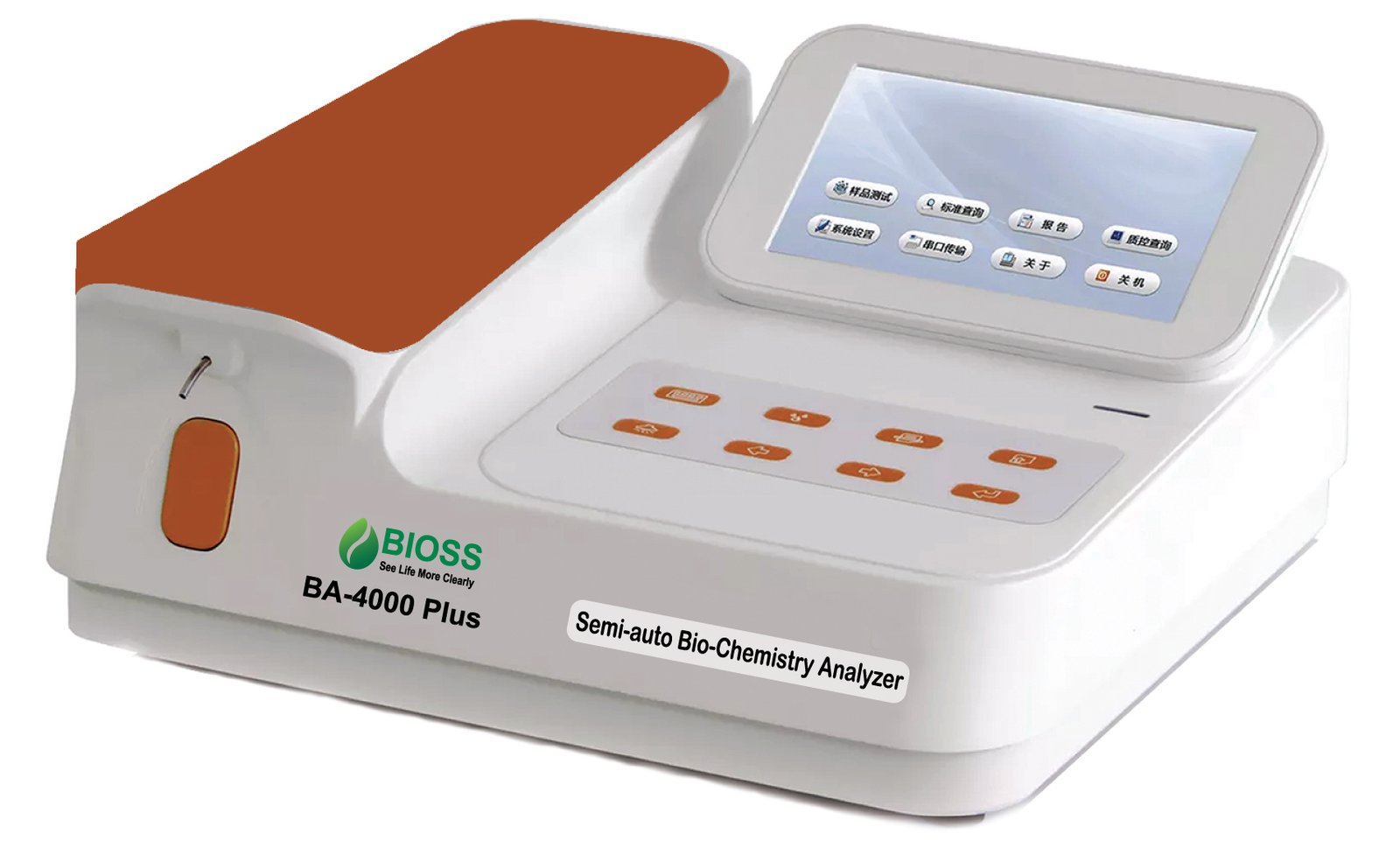
The BA-5000 is engineered for semi-automated biochemical analysis with enhanced stability and precision. Its modern touch-screen interface, grating optics, and multiple analytical modes make it suitable for routine and specialized biochemical testing. The system supports both flow cell and cuvette measurement modes and offers extensive data storage, connectivity, and QC functionalities for improved laboratory workflow.
Windows-based OS with large touch screen for smooth operation
Real-time reaction curve display
Continuously adjustable grating optics ensuring high stability
Reagent-open system with flow cell & cuvette modes (close system available)
Multiple test modes: kinetic, two-point, bichromatic endpoint, calibration curves
Large memory capacity: 200–250 test protocols & up to 200,000 results
Comprehensive QC program: Westgard rules, Levey–Jennings charts, dual control support
Flexible output options: detailed patient reports
Multiple connectivity options: RS-232, VGA, USB, SD, Ethernet
Remote data sharing & OS updates via internet
Compact, easy-maintenance design
Multi-language software support (English default)
Advanced grating optical system for accurate wavelength selection and improved analytical stability
Tungsten Halogen lamp ensuring consistent illumination
Photometric range: 0.000–2.700 Abs
Seven standard wavelengths: 340, 405, 500, 546, 578, 620, 670 nm (+2 optional)
Touch-screen control system integrating software-driven workflows
Supports both flow cell and cuvette measurement modes
Built-in & external printer support for reporting needs
Sample Aspiration Volume: 200–6000 μL
Temperature Modes: 25°C, 30°C, 37°C
Display: 7.5” color touch-screen LCD
Input Devices: USB, mouse, keyboard
Power Supply: AC 100–240V, 50/60Hz
Suitable for:
Clinical laboratories
Hospitals and diagnostic centers
Medical colleges & research facilities
The BA-5000 operates on photometric biochemical analysis, measuring absorbance changes at defined wavelengths using a high-stability grating optical system. Results are processed through multiple analytical modes such as kinetic, endpoint, bichromatic, and calibration curve methods, ensuring accurate quantification of biochemical parameters.
High accuracy and stable photometric performance
Flexible analytical modes suitable for diverse biochemical tests
Large data storage and advanced QC capabilities
Modern touchscreen interface and easy operation
Robust connectivity options for LIS/HIS integration
Reliable performance with minimal maintenance
 BiossBioTech